
NHLDS · Ministry of Health
Connecting every facility to specialised laboratory testing
The National Specimen and Result Transport Network (NSRTN) — also known as the hub system — connects health facilities across Uganda to district hubs and national reference laboratories, so specimens reach the right test and results return to patients in time.
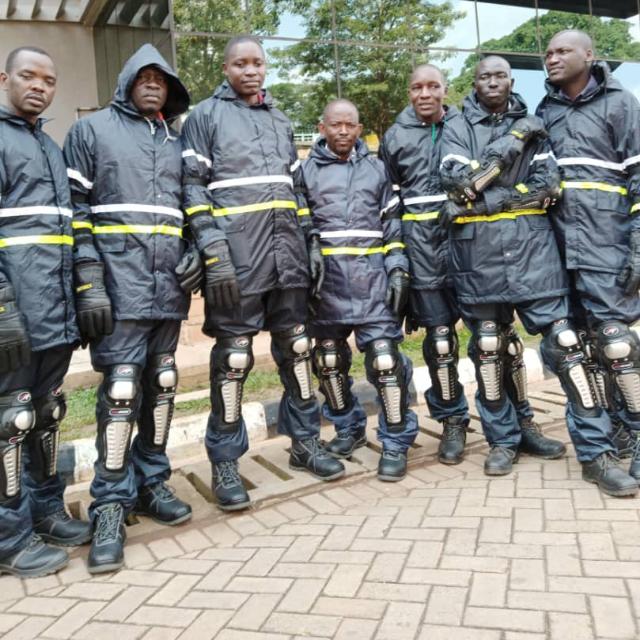
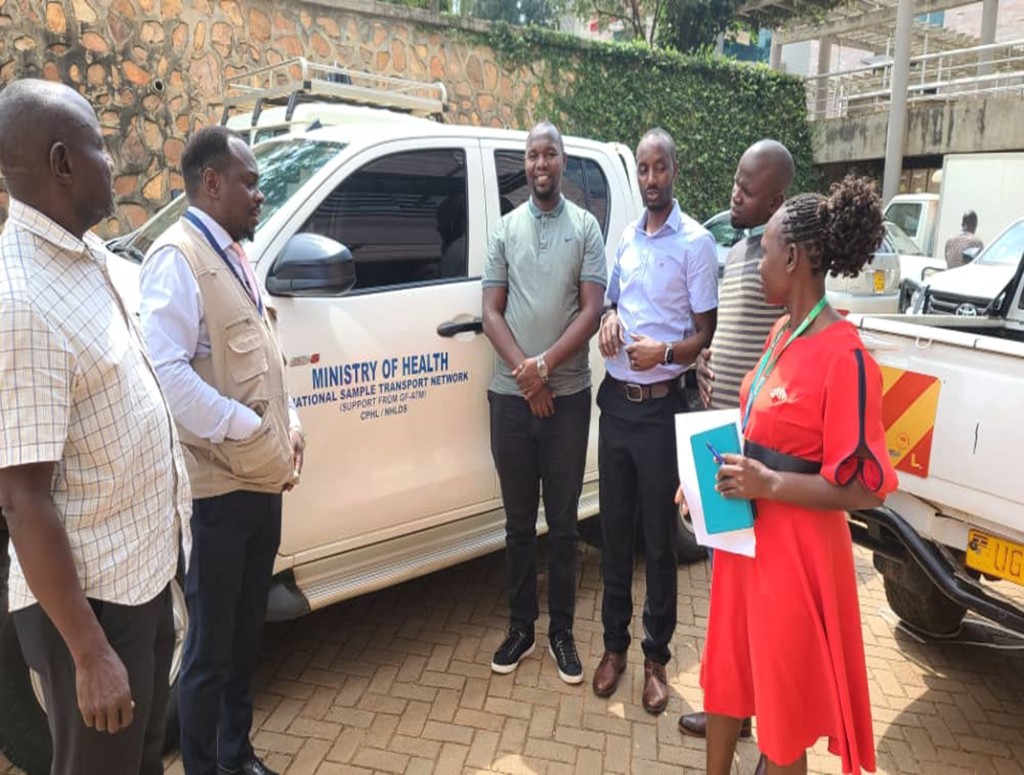
Established in 2011 to harmonise specimen transport, reduce cost, and improve access to specialised laboratory tests, the network now covers every district in Uganda. Motorcycle couriers collect specimens from facilities to hubs; vehicles move samples from hubs to reference laboratories; and results are returned through the same system.
The NSRTN carries routine, outbreak, surveillance, and One Health samples. It also delivers sample-collection materials, cartridges, external quality assessment (EQA) panels, and laboratory equipment for service, repair, and calibration.
How the network works
A hub is a laboratory in the national network with stronger infrastructure, equipment, human resources, and quality management systems. It performs routine tests for its host facility and for other health facilities in its catchment area.
The network uses a hub-and-spoke model: community facilities (spokes) send specimens to the hub, which coordinates onward shipment to provincial or national reference laboratories and the return of results.
- 1Facilities collect specimens
- 2Motorcycle couriers to the hub
- 3Vehicles to reference laboratories
- 4Results returned to facilities

National coverage
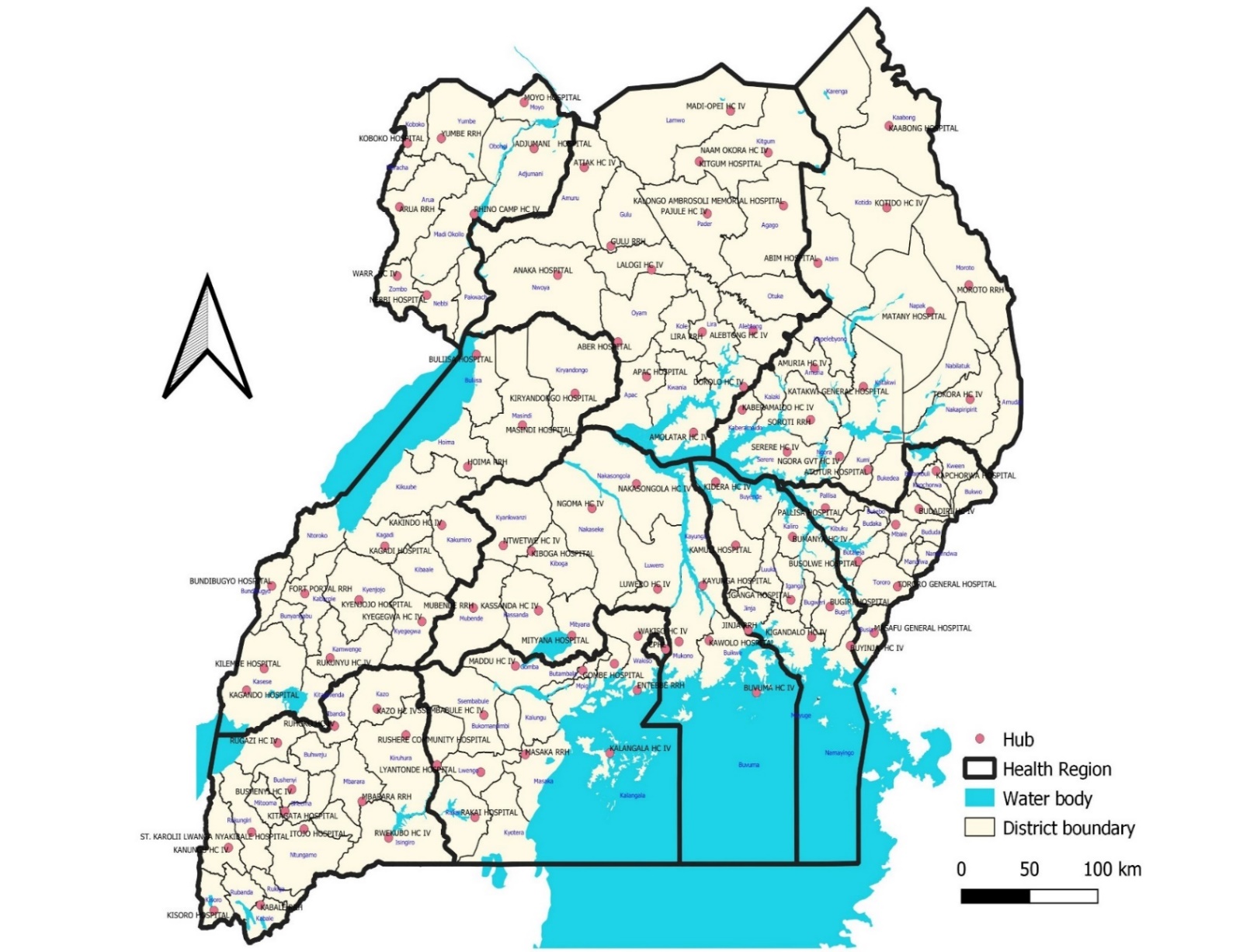
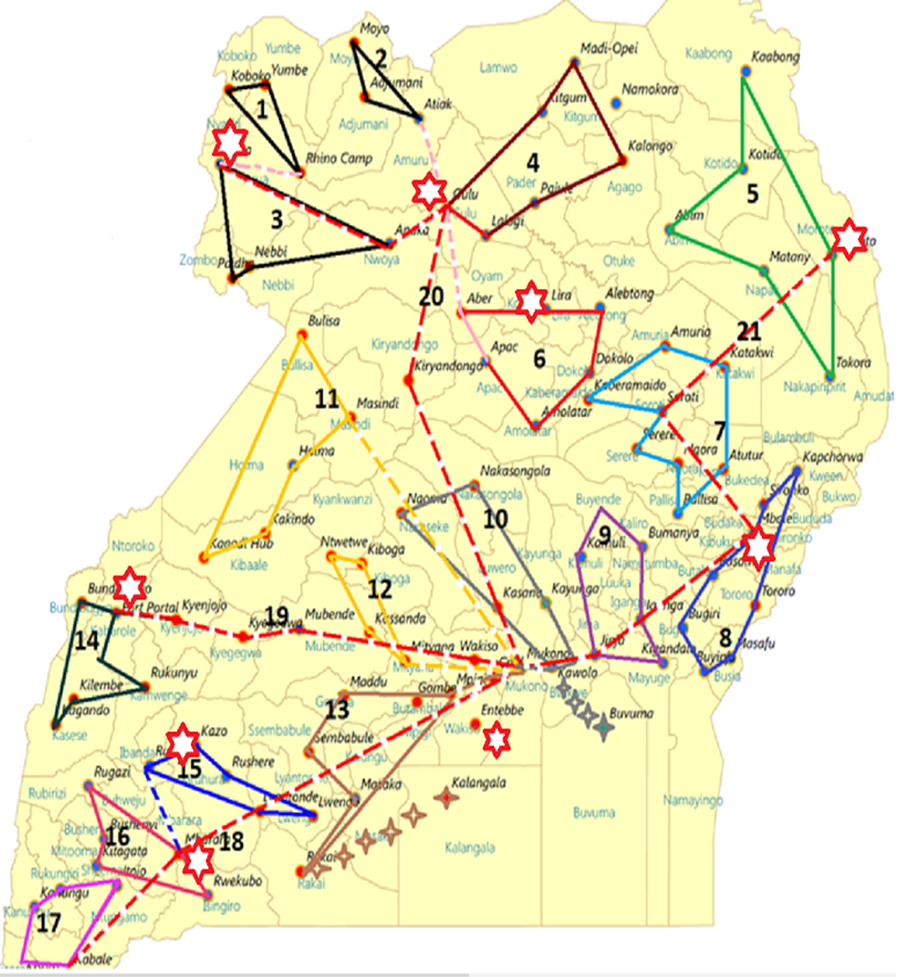
The network reaches all 146 districts through 102 hubs — including Amudat and Bukwo hospitals — serving more than 3,000 health facilities. Vehicle routing covers about 100 hubs and includes veterinary laboratories, so animal-health samples move on the same national system.
Programmes served
The NSRTN is an integrated system. It transports samples and related commodities for HIV, tuberculosis, hepatitis, malaria, outbreak response, surveillance, blood transfusion, animal health, EQA, and laboratory logistics.
HIV
Viral load, early infant diagnosis (EID), HIV drug resistance, and advanced HIV disease testing.
Tuberculosis
GeneXpert testing and multidrug-resistant TB specimen referral.
Hepatitis, malaria and specialised tests
Hepatitis B viral load, malaria, sickle cell disease, pathology, and cytology.
Outbreak and surveillance
Viral haemorrhagic fevers including Ebola, plus AMR, measles, rubella, COVID-19, and AFP/polio (including environmental samples).
One Health
Animal samples including anthrax and foot-and-mouth disease, alongside human-health outbreak samples such as rabies.
Logistics and quality
EQA panels, sample-collection materials, cartridges, and equipment for service, repair, and calibration.
EQA panels transported on the network include TB, CD4, CrAg, HPV, hepatitis B, COVID-19, point-of-care viral load and EID, HIV, and syphilis.
Sample integrity and tracking
Credo Cube cold-chain boxes keep plasma and other temperature-sensitive specimens within recommended transport temperatures for up to five days after a single recharge at −80°C, protecting viral load plasma and other cold-chain samples in transit.
Electronic sample tracking (e-ResTrack) follows specimens from lower-level facilities to reference laboratories, supporting chain of custody, turnaround time, and results return. The system integrates with DHIS2 (IDSR) so outbreak samples can be located in transit and delays reduced.
Public dashboards
Integrated Requests and Results Dispatch System (IRRDS) dashboards support viral load, EID, sickle cell disease, hepatitis B, and hub operations.
Viral load dashboard
National HIV viral load testing performance and results.
Open dashboard →EID dashboard
Early infant diagnosis, sickle cell disease, and hepatitis B testing.
Open dashboard →Hub operations tracker
Monitoring of hub activity and motorcycle courier visits.
Open dashboard →Impact
Efficiency
Integration has reduced costs, improved logistics response times, and increased both the volume and variety of samples the network can carry.
Faster results
Turnaround from collection to results is typically 4–5 days for routine samples, with cold-chain capacity for viral load plasma.
Outbreak response
The network has supported response to Ebola virus disease, anthrax, Mpox, and cholera, and the movement of UPHIA survey samples.
Blood and quality
It also moves blood samples and units for transfusion, and EQA samples including HIV CD4, TB, AMR, and EID point-of-care programmes.
Partners and regional role
Operations are supported by the Government of Uganda, PEPFAR through its implementing partners, the Global Fund, and WHO.
- Government of Uganda
- PEPFAR implementing partners
- Global Fund
- WHO
Uganda’s hub-and-spoke model has been benchmarked by several African countries, including Zimbabwe, Côte d’Ivoire, Sierra Leone, and Malawi. ECSA has trained 21 countries on integrated sample and results systems, and Africa CDC trained 13 countries on sample management and referral in 2023. Similar hub-and-spoke systems have been established in The Gambia and Sierra Leone.
Diagnostic Network Optimization (DNO) is used to keep the network aligned with testing demand and capacity — improving access, placing instruments where they are needed, and generating efficiencies as the system grows.
Work with the network
NHLDS coordinates the National Specimen and Result Transport Network for routine diagnostics, outbreak response, and One Health specimen referral.
Contact NHLDS